 Gulf Developer's Guide · 2026 Edition
The Gulf Developer's Guide to Green Building Certification
LEED v5 vs Estidama — costs, timelines, and the decision framework that has guided 350+ projects across the Gulf.
About this guide
ISG has delivered over 350 certified projects across the Gulf — LEED, Estidama, BREEAM, GSAS, and Mostadam. This guide distills the most common questions our clients ask before committing to a certification pathway.
It is written for developers, architects, project managers, and consultants working on commercial, residential, and mixed-use projects who want clear answers about costs, timelines, regulatory mandates, and return on investment.
Where opinions appear, they are ours — informed by ten years of documentation, submissions, and construction sites.
- Published
- April 2026
- Edition
- First · LEED v5
- Geography
- UAE, KSA, Qatar, Bahrain
- Reading time
- 18 minutes
© 2026 Integrative Sustainability Group. All rights reserved. This document is provided for informational purposes. Specific project decisions should be made in consultation with a qualified sustainability consultant. The data and recommendations in this guide reflect market conditions current at the time of publication.
A note from the founders
We wrote this guide because it is the conversation we have at every project kickoff — and it deserves to be written down.
When we founded ISG, the certification process our clients navigated was unnecessarily painful. Documentation hunts at 2 a.m. Retrofit credits chosen by budget, not design. Pearl ratings won at the permit window instead of in schematic design. These were solvable problems, and yet nobody was solving them at scale in the Gulf.
Ten years and 350+ projects later, the pattern has not changed. LEED v5 has rewritten the rulebook. Estidama is still the regulatory baseline in Abu Dhabi. Mostadam is finding its footing in Saudi Arabia. Every week, a developer calls us with the same three questions: which system, how much, how long.
This guide is our answer. Nothing here is marketing. Everything is the consequence of projects we have watched succeed and fail at close range. We hope it is useful — and if it prompts a harder question than the ones answered here, email us.


What's inside
- 01 The Business Case for Green Certification 05
- 02 LEED v5 vs Estidama — Two Systems, Different Purposes 08
- 03 Which Certification for Which Emirate 12
- 04 True Costs and Timeline 15
- 05 The Decision Framework 17
- 06 Return on Investment 20
- 07 Seven Pitfalls That Add Months to Your Timeline 21
- 08 Getting Started: Your Next Steps 23
The business case for green certification
Green building in the Gulf is no longer a marketing overlay. It is how rent premiums are earned, how tenants are attracted, and how assets keep their value over a twenty-year horizon.
Certification is no longer optional
Green building certification in the Gulf has moved from differentiator to default. Regulatory mandates in Abu Dhabi, Dubai, and Saudi Arabia now require varying levels of environmental performance. But beyond compliance, the economics are compelling enough that the better question is not whether to certify but which system to pursue.
The value is visible in the rent roll. Certified buildings in the UAE command significantly higher rents than their non-certified counterparts, and they fill faster. Combined with lower operating costs and improved tenant retention, the financial case pays back within two to four years of operation.
Beyond the rent, certification increasingly affects access to capital. Green building funds, ESG-linked loans, and sustainability-focused investors are growing rapidly in the Gulf. Several UAE banks now offer preferential financing terms for certified buildings. In Saudi Arabia, green finance initiatives are making certification a pathway to cheaper capital for Vision 2030 developments.
Who this guide is for
Developers, architects, project managers, and consultants working on commercial, residential, and mixed-use projects in the UAE and broader Gulf region. It assumes you have a project in planning or early design and need to choose the right certification pathway.
The earlier you engage a sustainability consultant, the cheaper certification becomes. Concept-stage integration is minimal cost. Construction-stage retrofits can triple your fees and add six months.
LEED v5 vs Estidama: two systems, different purposes
The two dominant certification systems in the Gulf serve different needs. Understanding their origins, scope, and regulatory status is the first step toward the right choice.
Two systems built for different jobs
The two dominant certification systems in the Gulf are built for different problems. LEED is a global framework refined over 25 years of projects in every climate zone. Estidama is a regional framework built from scratch for Abu Dhabi's climate, culture, and regulatory environment. Choosing between them — or combining both — depends less on the buildings themselves and more on where they stand and who they serve.
LEED v5 — Leadership in Energy and Environmental Design
Developed by the U.S. Green Building Council, LEED is the world's most widely recognized green building certification system, operating in more than 180 countries. In April 2025, USGBC released LEED v5, the most significant rewrite of the rating system in a decade. Every credit is now mapped to one of three impact areas: Decarbonization (roughly 50% of available points), Quality of Life (roughly 25%), and Ecological Conservation and Restoration (roughly 25%).
v5 also introduces four new mandatory prerequisites across the rating systems: Carbon Assessment, Climate Resilience Assessment, Human Impact Assessment, and Tenant Guidelines. Platinum now requires 100% renewable energy and a 20% embodied carbon reduction against a baseline. The new energy baseline is ASHRAE 90.1-2022.
In the Gulf, LEED is the preferred choice for internationally-branded developments, multinational corporate offices, and projects targeting global investors. Dubai has long favored LEED as its primary international sustainability benchmark, and private developers across the region choose LEED for its global recognition.
Estidama (Pearl Rating System)
Developed by the Abu Dhabi Department of Municipalities and Transport, Estidama — which means "sustainability" in Arabic — is specifically designed for Abu Dhabi's hot-arid climate, cultural context, and regulatory environment. The Pearl Rating System evaluates projects on integrated development, natural systems, livable buildings, precious water, resourceful energy, stewarding materials, and innovating practice.
Estidama is mandatory for all new projects in Abu Dhabi. A minimum 1 Pearl rating is required, with government buildings requiring 2+ Pearls. This is not optional — it is enforced through the building permit process.
Side-by-side comparison
A quick reference for the questions that come up in every kickoff meeting.
| Criteria | LEED v5 | Estidama (Pearl) |
|---|---|---|
| Origin | U.S. Green Building Council | Abu Dhabi DMT |
| Recognition | Global (180+ countries) | Abu Dhabi & regional |
| Released | April 2025 | 2010 (active) |
| Levels | Certified, Silver, Gold, Platinum | 1 Pearl through 5 Pearls |
| Mandatory? | No (market-driven) | Yes (Abu Dhabi) |
| Climate focus | Global (adaptable) | Hot-arid specific |
| Framework | 3 impact areas (decarb, QOL, ecology) | 7 categories |
| Water emphasis | Moderate (elevated in v5) | Very high |
| Cultural credits | Limited | Integrated (livable communities) |
| Consultant fees | AED 150K – 500K+ | AED 100K – 400K+ |
| Timeline addition | 3 – 6 months to project | 4 – 8 months to project |
| Registration fees | USD 1,500 – 65,000 (USGBC) | Included in permit process |
The choice between LEED and Estidama is rarely binary for Abu Dhabi projects. Estidama is mandatory; LEED is an overlay chosen for international recognition. The marginal cost of dual certification is typically 30–40% less than pursuing both independently, because many credits overlap. ISG has delivered 100+ dual-certified projects.
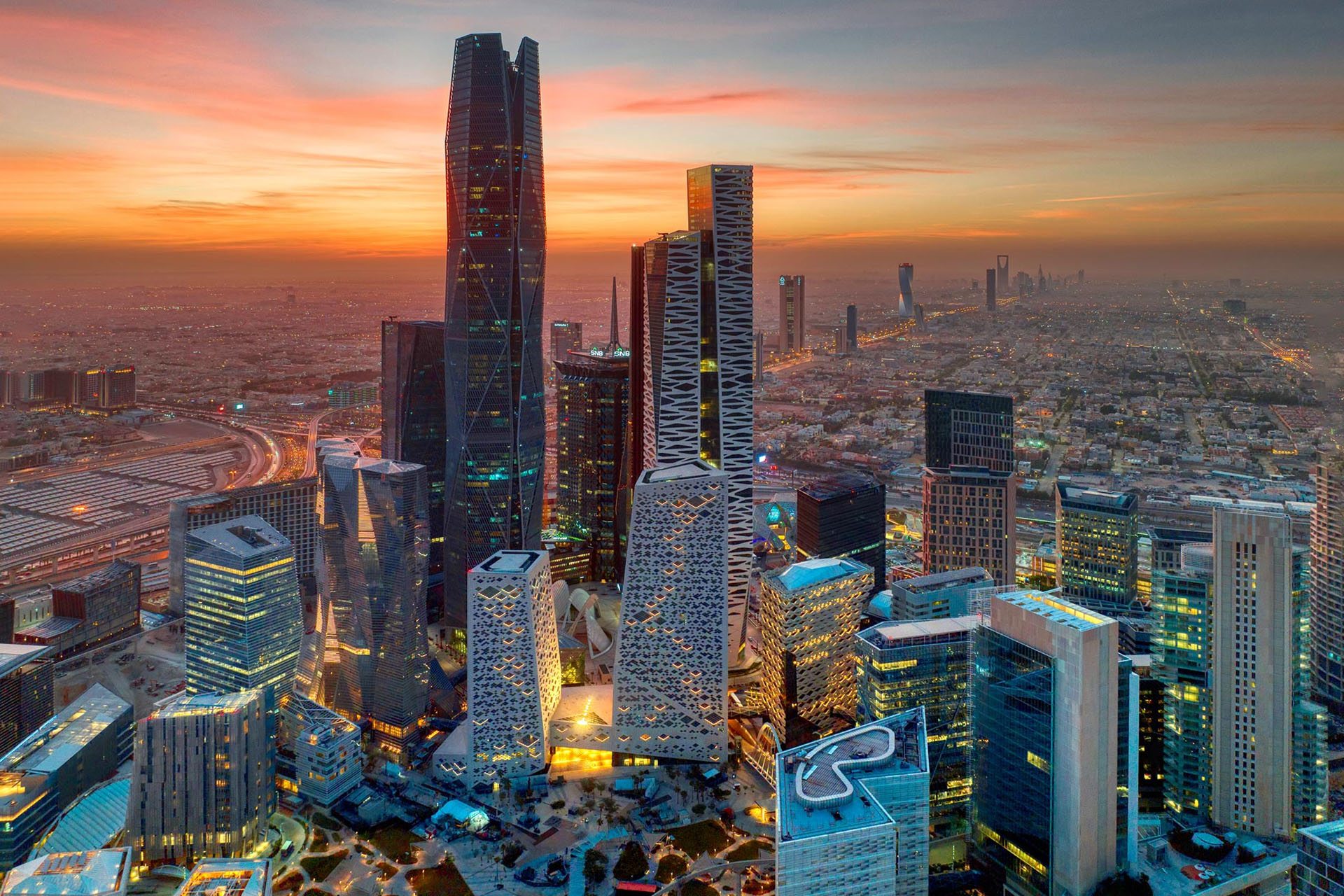
King Abdullah Financial District — Riyadh's Vision 2030 financial quarter, where LEED certification has become the de facto standard for marquee government-linked developments.
Which certification for which emirate
Your project's location largely determines which certification you must pursue — and which you should pursue on top of the mandatory one.
Geography drives the decision
Your project's location largely determines which certification you must pursue — and which you should pursue on top of the mandatory one. The regulatory landscape across the Gulf is fragmented, and each jurisdiction has its own baseline expectations. Here is what matters for each major market.
Abu Dhabi — Estidama is mandatory
Every new building in Abu Dhabi requires a minimum 1 Pearl Estidama rating. Government buildings require 2+ Pearls. This is enforced through the building permit process — you cannot receive a permit without it. Many international developers add LEED v5 for the global recognition and marketing value, creating a dual-certification approach that is now standard for Class A office.
For Abu Dhabi projects targeting international tenants or investors, pursue both Estidama (mandatory) and LEED v5 Gold. The marginal cost of the dual certification is 30–40% less than the sum of both independently, because many credits overlap.
Dubai — LEED is the market standard
Dubai adopted Al Safat, its own green building evaluation system, in 2016. However, most private developers and international projects still choose LEED for its global recognition. The Dubai Green Building Regulations provide the baseline, and LEED certification builds on top of that. There is no mandatory Estidama requirement in Dubai.
Saudi Arabia — LEED dominates, Mostadam emerging
Saudi Arabia does not mandate a specific certification system, but LEED has become the de facto standard for Vision 2030 mega-projects. The Saudi Green Building Forum promotes the Mostadam system, which is gaining traction for residential projects. For commercial and mixed-use developments, LEED remains the clear choice — and v5's decarbonization framing aligns tightly with Vision 2030's energy transition targets.
Qatar — GSAS required
Qatar has its own Global Sustainability Assessment System (GSAS), mandatory for all government and large private projects. LEED is sometimes pursued in addition for international recognition, but GSAS is the baseline requirement.
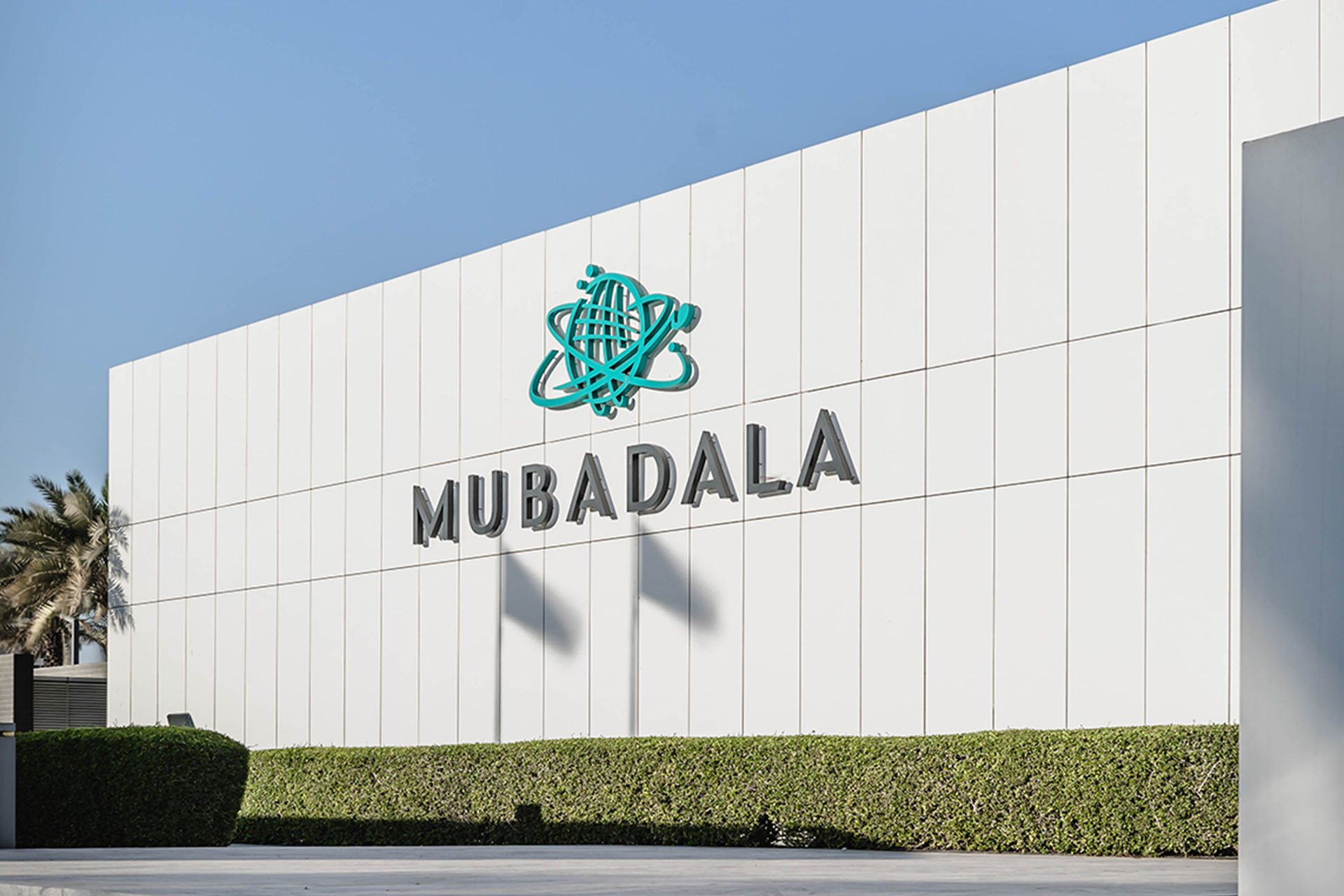
Mubadala Tower — an Abu Dhabi project where Estidama is mandatory and LEED overlays for international tenants. The standard playbook for Class A commercial on the Corniche.
True costs and timeline
Certification costs include more than consultant fees. Understanding the full financial picture prevents budget surprises and helps you make the right investment.
Budgeting for certification
Certification costs are never a single line item. They show up in consultant fees, registration fees, energy modeling, commissioning, and — critically — a small premium on construction cost. The single biggest determinant of total cost is when you engage your sustainability consultant. Early engagement costs little. Late engagement costs a lot.
Direct costs
| Cost component | LEED v5 Silver/Gold | Estidama 2 Pearl |
|---|---|---|
| Consultant fees | AED 200K – 500K | AED 150K – 400K |
| Registration & review fees | AED 20K – 80K | Included in permit |
| Energy modeling | AED 30K – 80K | AED 25K – 60K |
| Commissioning | AED 50K – 150K | AED 40K – 120K |
| Construction premium | 2 – 5% | 1 – 4% |
| Typical total | AED 400K – 1.2M | AED 250K – 800K |
The timing lever
Certification adds time primarily in design and documentation. The most critical factor is when you engage your sustainability consultant. Early engagement during concept or schematic design adds minimal time. Late engagement (after design development) can add six months or more and significantly increase costs, because design changes become expensive retrofits rather than elegant integrations.
Common pitfall. Engaging a sustainability consultant after design development is complete typically adds 6–9 months and 40–60% more in fees. The design changes required to achieve certification become costly retrofits rather than elegant integrations.
The decision framework
A practical ladder for deciding which certification pathway fits your project — built from the questions we ask in every kickoff meeting.
Work down the ladder
We use a simple decision ladder in every project kickoff. Start at the top and stop at the first question where the answer is yes — that branch usually defines your baseline certification. You can always layer additional systems on top for marketing or investor reasons, but answer these first.
- Is your project in Abu Dhabi? Estidama is mandatory. Start with your Pearl rating target. Add LEED v5 if your tenants or investors are international.
- Is your project in Qatar? GSAS is mandatory. Add LEED only if you need international marketing value for global investors or tenants.
- Is it a government-linked project in Saudi Arabia? LEED v5 is strongly expected for Vision 2030 developments. Target Gold or Platinum to match the ambition of the national vision — v5's decarbonization emphasis aligns tightly.
- Is it a private commercial development in Dubai? LEED v5 Gold is the market standard for Class A office and retail. It directly impacts rent premiums and tenant quality.
- Is it residential in Dubai or the Northern Emirates? LEED certification is less common for residential. Focus on Dubai Green Building Regulations compliance and consider LEED for premium branded residences.
- Is it an industrial or logistics facility? LEED is increasingly expected for logistics facilities serving international brands. The payback through energy savings is typically under three years.
- Is budget very tight? Focus on mandatory compliance first. Engage a consultant early so sustainability integrates with design rather than retrofits it later — this is always cheaper.
The financial case, in detail
The financial returns from green certification are well documented across the Gulf market. The headline numbers are striking on their own — but the real story is how they compound over the asset's operating life, and how they increasingly affect access to capital.
The headline numbers
Rent premium. Certified commercial buildings in the UAE command an average of 33% higher rent than comparable non-certified stock. The premium is larger in Class A office and smaller in secondary markets, but it is consistently positive.
Occupancy. Certified buildings run at roughly 96% occupancy versus 82% for non-certified comparables. This alone can swing the investment case, because vacancy is the single largest drag on asset performance.
Operating costs. Energy and water consumption run 20–30% lower in certified buildings. For a 30,000 sqm office tower, this can be hundreds of thousands of dirhams per year — and the gap widens as utility tariffs rise.
Exit value. At sale, certified buildings trade at a 10–15% premium versus comparable non-certified stock. For a AED 400M asset, that is AED 40–60M at exit.
Access to capital
Certification increasingly affects access to financing. Green building funds, ESG-linked loans, and sustainability-focused investors are growing rapidly in the Gulf. Several UAE banks now offer preferential financing terms for certified buildings. In Saudi Arabia, the Saudi Green Building Finance initiative is making certification a direct pathway to cheaper capital for Vision 2030 developments.
Seven pitfalls that add months to your timeline
Every one of these has cost a client time and money. Flag them at kickoff and you will avoid the worst surprises.
Mistakes we see again and again
These pitfalls come from post-mortems of real projects. None of them are hypothetical. Each one has cost a client time, money, or both. The good news: every one of them is avoidable if you know to look for it at kickoff.
Late consultant engagement
The single biggest mistake. Engaging a sustainability consultant during or after design development means expensive retrofits. Engage during concept design — the cost is minimal and the impact is maximum.
Treating certification as a checklist
Chasing individual credits without an integrated strategy leads to suboptimal designs. Credits should flow naturally from good design decisions, not be bolted on.
Underestimating documentation
Both LEED and Estidama require extensive documentation. Construction teams unfamiliar with the process often fail to capture required evidence during construction, requiring costly re-documentation or site revisits.
Ignoring commissioning requirements
Both systems require independent building commissioning. This is not the same as the contractor's standard handover testing. Plan and budget for an independent commissioning agent from early design.
Choosing credits for points, not performance
Some credits are easy to achieve but deliver minimal real-world benefit. Others require more effort but dramatically improve performance and tenant satisfaction. A good consultant helps you choose credits that serve both certification and your business.
Assuming one consultant covers everything
Sustainability certification intersects with MEP, architecture, landscape, and civil engineering. Your sustainability consultant should coordinate with all disciplines from the start, not work in isolation.
Forgetting the operations phase
Some credits and all performance certifications depend on how the building operates. Plan your operations strategy during design, not after handover. LEED v5's new prerequisites make this more explicit than ever.
Getting started: your next steps
What to prepare for your first meeting with a sustainability consultant — so the first hour is spent on strategy, not on gathering facts.
What to bring to your first meeting
Whether you are at concept stage or already in design development, the best time to engage a sustainability consultant is now. Here is what to prepare so the first hour of your first meeting is spent on strategy and not on fact-gathering. A good consultant can give you a clear recommendation after one focused session if you arrive prepared.
Project brief — location, type, GFA, target completion date.
Design status — concept, schematic, or design development?
Certification goals — mandatory compliance, marketing, tenant requirements?
Budget range — total construction budget and any sustainability allowance.
Tenant profile — international or local? Government or private? Single-tenant or multi?
Questions we'll ask you
A few of the questions we ask in every kickoff — think about them before the meeting so your team is aligned on the answers.
- Who is the end tenant? Different tenants care about different credits.
- Is certification mandatory or strategic? The answer changes the scoping approach.
- What happens if you miss the target? We plan for this.
- Who owns the building in 5 years? ROI math depends on hold period.
- What is the worst possible outcome? Risk shapes every decision.
Let's certify your project.
ISG has delivered 350+ certified projects across the UAE, Saudi Arabia, Qatar, and the UK. We help developers choose the right certification, manage the process, and maximize ROI.
- [email protected]
- Phone
- +971 4 387 3474
- Web
- isg.green
- Offices
- Abu Dhabi · Dubai · Riyadh · London