For fifteen years, sustainable construction in the Gulf meant flagship projects: a net-zero district here, a LEED Platinum tower there. COP28 ended that era. What replaced it is harder and more consequential -- a regulatory infrastructure that makes sustainability measurable, reportable, and enforceable at the level of every building permit, every exchange-listed disclosure, and every carbon credit traded.
I have spent the last two years watching this transition unfold from inside project delivery rooms across all six GCC markets. The shift is real, it is accelerating, and it is catching a significant portion of the industry off guard. Developers who were early movers on green certifications now find that voluntary excellence is being overtaken by mandatory compliance. The skills that earned recognition in 2022 are becoming baseline requirements in 2026.
This article maps the five structural changes reshaping GCC construction, the specific regulations and deadlines driving them, and what they mean practically for anyone designing, building, or financing projects in the region today.
The Five Big Shifts
What Changed After COP28
- Regulation became operational. Every GCC country has moved from aspirational sustainability targets to enforceable building codes, climate laws, and permitting requirements with specific compliance dates.
- Flagship projects became standards laboratories. THE LINE, Sustainable City, Msheireb -- these are no longer just trophies. Their performance data is shaping the codes and benchmarks that apply to ordinary projects.
- ESG reporting hit hard deadlines. Stock exchanges across the Gulf now mandate sustainability disclosures. The timeline is not "eventually." Bahrain requires reports within six months of fiscal year end. Oman made 30 metrics mandatory from 2025.
- Carbon markets are building infrastructure first. Saudi Arabia completed its first auction. The UAE legislated a national carbon credit registry. Qatar is targeting Article 6.2 compliance. The compliance mandates will follow the infrastructure.
- Workforce is the binding constraint. Every country has the ambition. Every country has the regulation. No country has enough professionals who can do whole-life carbon accounting, energy modeling, LCA, or ESG reporting at the scale now required.
These five shifts are interconnected. Mandatory codes create demand for ESG data. ESG reporting creates demand for carbon accounting. Carbon markets create financial incentives for verified performance. And all of it depends on professionals who mostly do not exist yet in the numbers needed. Understanding the architecture of this system -- not just any single piece of it -- is what separates the organizations that will thrive from those that will spend the next three years in reactive compliance mode.
Country by Country: What Changed
United Arab Emirates
The UAE laid down the most comprehensive legislative framework in the region. Federal Decree-Law No. 11 of 2024 on Climate Change established the legal architecture for emissions reduction, climate adaptation, and carbon trading at the federal level. This is not a voluntary framework -- it is law, and it applies to construction.
On the carbon side, Cabinet Resolution 67 of 2024 created the National Carbon Credit Registry, giving the UAE a formal mechanism for tracking and trading verified carbon credits. Alongside this, the National Green Certificates Programme launched in July 2024, covering renewable energy certificates for the power sector -- directly relevant to how buildings document their energy sourcing.
Abu Dhabi and Dubai continue to enforce their existing mandatory building rating systems -- Estidama and Al Sa'fat respectively -- while the federal framework adds a new layer of compliance that applies nationwide.
Saudi Arabia
Saudi Arabia moved from aspiration to enforcement faster than many anticipated. The Saudi Building Code SBC 1001 is now fully in force, with sustainability provisions embedded directly in the permitting process. The Mostadam system, administered through Benayat, processed approximately 7 million square meters of sustainability assessment in Q1 2025 alone -- a volume that signals the shift from pilot to standard practice.
On the carbon side, the Kingdom completed its first regulated carbon credit auction, clearing at SAR 37.5 per tonne of CO2 equivalent, with 2.5 million credits traded across 16 participating companies. This was not a symbolic exercise. It was a price discovery event that established the region's first carbon cost benchmark for project economics.
Qatar
Qatar adopted the Qatar Construction Specifications (QCS) 2024 in March 2024, integrating updated sustainability requirements into the national construction standard. GSAS continues to serve as the mandatory certification for government-funded projects, with over 2,400 certified projects to date -- a number that reflects both Qatar's World Cup infrastructure programme and the system's expanding reach into private-sector development.
Through the Global Carbon Council, Qatar is actively positioning itself for Article 6.2 carbon trading under the Paris Agreement -- a move that could make Qatari-verified carbon credits tradeable internationally, with direct implications for embodied carbon accounting in construction.
Bahrain
Bahrain's most impactful move was not in building codes but in capital markets. The Bahrain Bourse now requires listed companies to publish ESG reports within six months of their fiscal year end. For real estate developers and construction companies listed in Bahrain, this is not a suggestion -- it is a compliance deadline that directly requires documented sustainability performance from their built assets.
Oman
The Muscat Stock Exchange mandated 30 ESG metrics for listed companies starting in 2025. For the construction and real estate sector, this translates into quantified reporting requirements around energy consumption, water use, waste management, and emissions intensity at the asset level. Oman's approach is data-first: the metrics are specific, the deadline is now, and the tolerance for narrative-without-numbers is zero.
Kuwait
Kuwait moved toward alignment with international standards by issuing ISSB-aligned guidance based on IFRS S1 and S2. This effectively tells Kuwait's listed companies -- including its substantial real estate and construction sector -- to prepare for climate-related financial disclosures on the same framework being adopted by major capital markets globally. The guidance is currently voluntary but signals the direction clearly.
Major Projects Setting the Standard
These are not just architectural achievements. Each one is generating performance data that informs the codes and benchmarks applied to every subsequent project in its market. They are, in effect, the testing laboratories for the regulations described above.

Sustainable City, Yas Island
4.2 million square feet of mixed-use development targeting the highest Estidama rating ever awarded. The operational data from this project is directly informing Abu Dhabi's next revision of Pearl requirements.

THE LINE, NEOM
Targeting 100% renewable energy and zero operational emissions. Regardless of where one stands on the project's scale, its energy and materials specifications are establishing benchmarks that Saudi regulators reference directly.
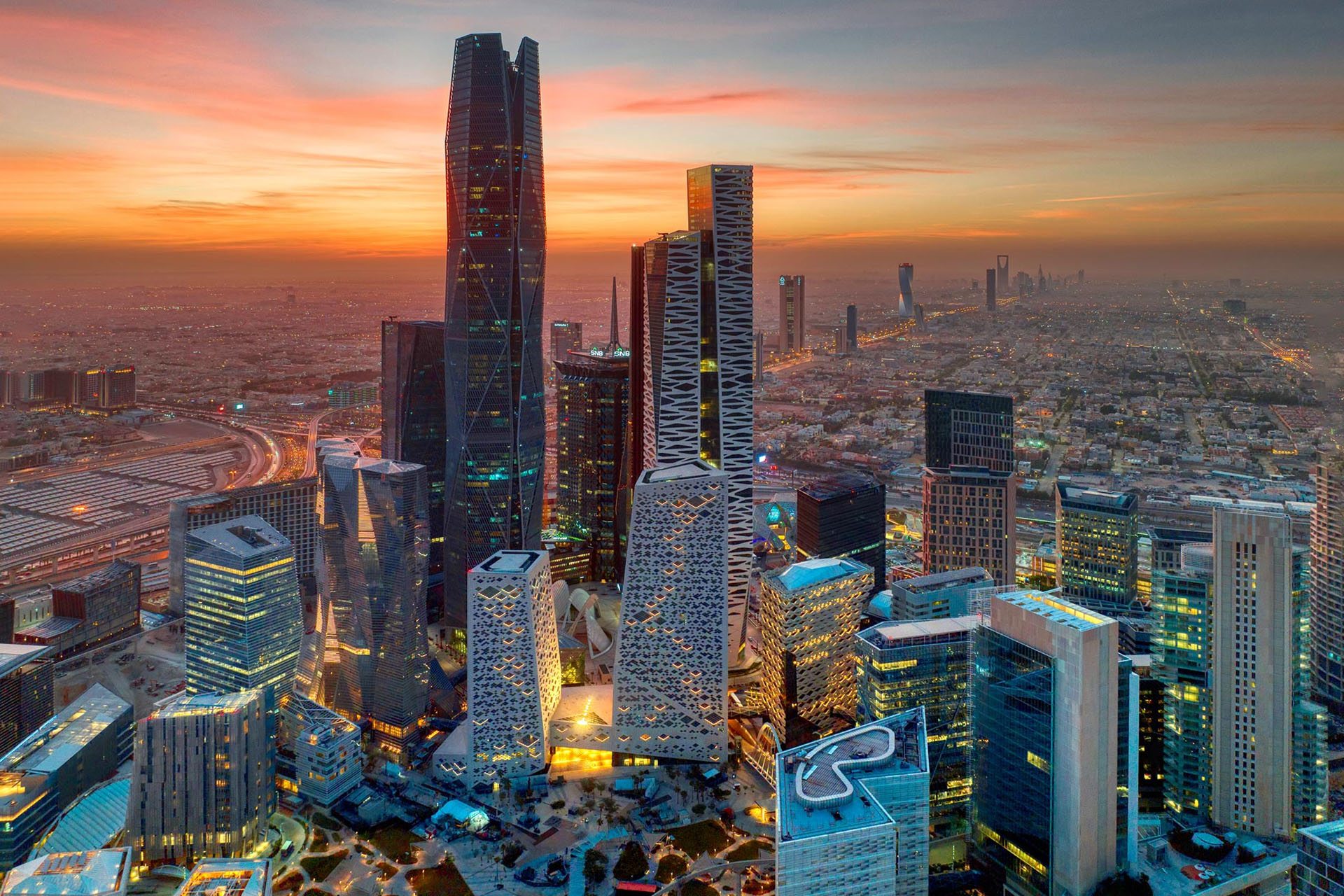
Red Sea International Airport
Achieved LEED Platinum certification in January 2026 -- one of the highest-rated airport facilities in the world and a proof point for large-scale transport infrastructure meeting the most demanding international standards.
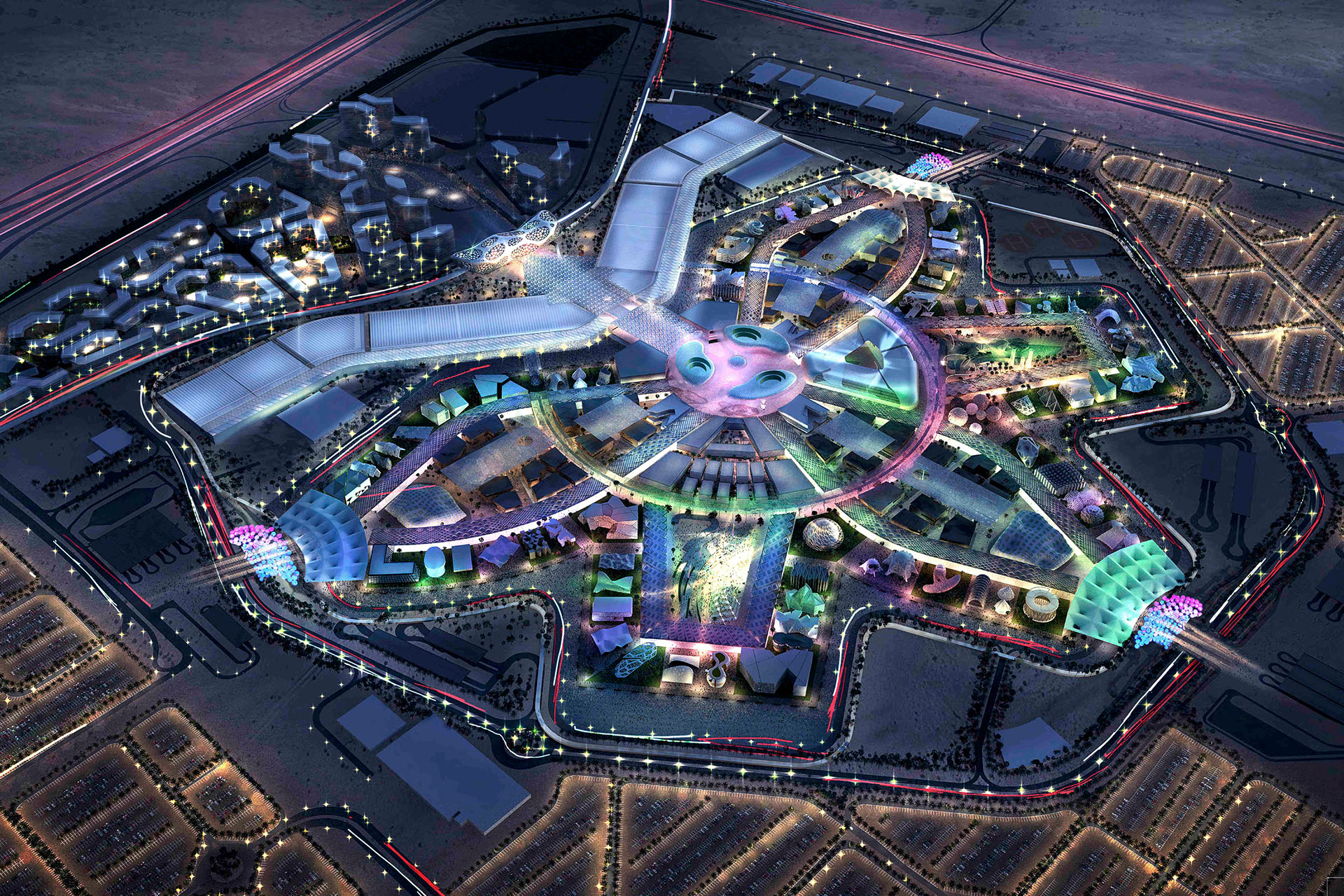
Msheireb Downtown, Doha
The world's first LEED-certified sustainable downtown regeneration. Multiple buildings at Gold and Platinum levels. Its district cooling and passive design data underpins GSAS energy benchmarks for urban development in Qatar.
Sustainable City Yiti, Oman
A 1 million square meter mixed-use development targeting net-zero operations by 2040. As Oman's first large-scale sustainable community, Yiti's performance metrics will serve as the benchmark for the country's emerging green building framework -- a framework that is still being written, which gives this project outsized influence on the standards that follow.
ESG Reporting: The Hidden Regulator
Building codes tell you what to design. ESG reporting tells you what to measure, document, and disclose after the building is standing. For listed companies -- which includes most major developers and construction firms in the GCC -- these requirements are now as binding as any planning regulation.
The variation across exchanges is significant, and it matters for anyone operating in multiple GCC markets.
| Exchange | Requirement | Status | Key Detail |
|---|---|---|---|
| Bahrain Bourse | Mandatory ESG report | In force | Must publish within 6 months of FY end |
| Muscat Stock Exchange | 30 ESG metrics mandatory | In force (2025) | Quantified metrics, not narrative |
| Qatar Financial Centre | Mandatory sustainability reporting | In force | Applies to QFC-regulated entities |
| Kuwait Boursa | ISSB-aligned guidance (S1/S2) | Guidance issued | Voluntary now; signals compliance path |
| ADX / DFM (UAE) | ESG disclosure guidance | In force | Federal Decree-Law 11/2024 backstops |
| Tadawul (Saudi) | ESG disclosure rules | In force | Linked to Vision 2030 compliance |
The practical consequence for construction: every project delivered for a listed entity now needs to produce data that feeds directly into ESG disclosures. Energy consumption. Water intensity. Construction waste diversion rates. Embodied carbon estimates. These are not optional metrics for the sustainability report appendix -- they are compliance data with regulatory deadlines attached.
The project that cannot produce auditable sustainability data does not just fail a certification review. It creates a disclosure gap in its owner's mandatory ESG report. That is a securities regulation problem, not a sustainability problem.
Carbon Markets: Where the Money Is
Three numbers frame the current state of GCC carbon markets:
Saudi auction price
Saudi first auction
in Saudi auction
Paris Agreement
The pattern across the GCC is consistent: infrastructure first, compliance later. Every major market is building the registries, trading platforms, and verification systems now. The mandates that require companies to offset or reduce will follow once the infrastructure can support them.
Saudi Arabia
The first auction established a real price signal. SAR 37.5 per tonne of CO2 equivalent is not a symbolic number -- it is a cost that project economists can now plug into feasibility models. For a large commercial building with 20,000 tonnes of embodied carbon, that represents a potential liability of SAR 750,000 if offset requirements are extended to construction. Whether that happens in 2027 or 2030, the directional signal is clear.
United Arab Emirates
The National Carbon Credit Registry, established through Cabinet Resolution 67/2024, provides the legal and technical infrastructure for carbon credit issuance, transfer, and retirement in the UAE. Combined with the National Green Certificates Programme launched in July 2024, the UAE now has a complete framework for tracking both carbon credits and renewable energy certificates -- the two instruments most directly relevant to building-level sustainability claims.
Qatar
The Global Carbon Council's pursuit of Article 6.2 alignment positions Qatar to participate in international carbon credit trading under the Paris Agreement framework. For construction, this means that verified emission reductions from Qatari buildings could eventually become tradeable instruments -- creating a financial return on investments in energy efficiency and low-carbon materials that goes beyond energy cost savings alone.
The Workforce Gap
Every regulation described in this article requires human beings to implement it. That is where the entire system faces its tightest constraint.
The Binding Constraint
Across the GCC, the demand for sustainability professionals in construction is outpacing supply in every market. Saudi Arabia faces the largest absolute gap -- driven by the sheer volume of Vision 2030 projects. The UAE is second, compounded by the simultaneous demands of new federal climate legislation and existing emirate-level certification requirements.
The five most critical shortage areas:
- Whole-life carbon accounting -- the ability to calculate and verify embodied and operational carbon across a building's full lifecycle.
- Energy modeling specialists -- not software operators, but professionals who can interpret simulation outputs against Gulf-specific climate data and code requirements.
- Green materials procurement -- sourcing and verifying low-carbon materials with auditable environmental product declarations in regional supply chains.
- ESG reporting leads -- professionals who can translate project-level sustainability data into exchange-mandated disclosure formats.
- Construction waste and circularity -- managing waste diversion, material passports, and circular economy compliance for projects where landfill diversion is now a code requirement.
This is not a training problem that resolves itself in twelve months. Whole-life carbon accounting requires a combination of engineering knowledge, LCA methodology, and familiarity with regional standards that takes years to develop. Energy modeling at a compliance-grade level demands both software proficiency and building physics expertise. These are not skills you can upskill into through a weekend certification course.
The organizations that recognized this gap eighteen months ago and began investing in internal capability building are now operating at a material advantage. Those that treated it as someone else's problem are discovering that the talent market is thin, expensive, and getting thinner.
What This Means for You
The practical implications differ by role, but the underlying message is the same: the era of sustainability as a value-add is over. It is now operational infrastructure.
For Developers
Adopt a carbon-and-documentation-first delivery model. Every project should have its carbon accounting framework and documentation strategy established before design development begins -- not bolted on during construction. The projects that will move fastest through permitting and achieve the most favorable financing terms are those that can demonstrate verified sustainability performance from day one.
For Contractors
Build green QA/QC as a compliance function, not a marketing function. Construction waste tracking, materials verification, and energy commissioning are no longer differentiators -- they are contract requirements that carry liquidated damages when they fail. The contractor who treats sustainability documentation with the same rigor as safety documentation will win repeat work. The one who treats it as a consultant's afterthought will face claims.
For Consultancies
Specialize or be commoditized. The market no longer rewards generalist sustainability consultancies that do a little LEED, a little energy modeling, and a little reporting. The value is in deep specialization: lifecycle assessment and embodied carbon, ESG controls and reporting frameworks, code-compliant energy simulation, or carbon credit verification. Organizations that build genuine depth in one or two of these areas will command premium fees. Those that remain generalists will compete on price.
Ready to build for what is coming?
ISG operates across all four major certification systems and all six GCC markets. From code compliance to carbon strategy, we deliver the documentation and performance that the new regulatory landscape demands.
Related: LEED vs Estidama vs BREEAM vs GSAS: Choosing the Right Rating System for the Gulf
Get in touch